Making Money With a Full-Time Job: How I Fit It In
Can you make extra money with a full-time job? Yes, whenever you have time. How I fit it in: a window you pick, one market, and rules set before you start.

If you work a full-time job, you've probably heard that trading means sitting at a screen all day. The version I teach fits around a job instead. It takes three things: a window you pick, one market, and rules you write down before you start.
You can do this whenever you have time. Futures trade almost around the clock and crypto never closes, so the system works in whatever time you have: before work, on a lunch break or in the evening. The three parts below are the same at any time of the day. Only the clock changes.
Can you trade if you work full time?
Yes. Just not the way you see in the movies, staring at six screens all day. The SEC calls that kind of day trading "an extremely stressful and expensive full-time job," and I agree. That version doesn't fit next to a job, and it isn't what I teach.
A short, fixed window changes a few things. You aren't watching all day, you take fewer trades, and you know when you're done. It doesn't change the risk on each trade. A bad trade in a short window costs the same as a bad trade at any other time.
The window: whenever you have time
Nasdaq futures, the market I trade, run almost around the clock. CME Group lists their hours as Sunday 6:00 p.m. to Friday 5:00 p.m. Eastern, with a one-hour break each afternoon. So the window can sit wherever your free time is.
Some people like the stock market open, which is 9:30 a.m. Eastern (Nasdaq's regular session runs from 9:30 a.m. to 4:00 p.m. Eastern). Others trade before work, at lunch or after dinner. The rules are the same in every one of them.
You pick your window around your life first, then learn to trade inside it. My course has a lesson on exactly this, called "What Time Will You Be Trading."
The routine in three parts
Before you start
You get set up: your chart, the one market you trade, and your rules in front of you. You decide ahead of time how much you're willing to lose on a trade, so you aren't deciding it in the middle of one.
Inside your window
You wait for one of the setups you've learned. If it shows up, you take it with your exit already decided. If it doesn't show up, you don't trade. One of my lessons says it right in the title: "If There's No Setups, Don't Trade."
After
You write down what happened, and you stop.
When I take profit, that's it. I'm done for the day.
Stopping is part of the plan. There's a lesson in the course called "A Successful Trade Doesn't Mean Keep Going," because giving back a good day is one of the easiest mistakes to make.
Why one market
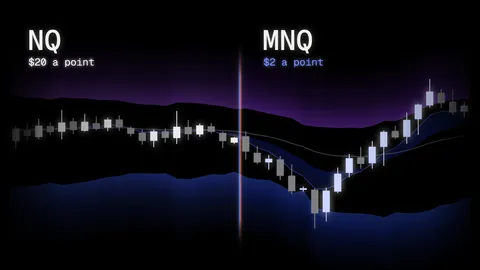
Next to a job, you don't have time to learn ten markets. I teach one: Nasdaq futures, either the full-size NQ contract or the Micro MNQ, which is one tenth the size. That means one chart, one set of hours, and one set of setups you get to know by sight. One of the first lessons in the course is called "Trade this ONE Stock," and it's about exactly this. If you're deciding between the two contracts, I compared them in MNQ vs NQ.
Practice starts on paper. A paper trading account is a practice account with pretend money on the real chart. You learn the routine, and make your first mistakes, without putting real money at risk.
The honest limits
- The routine fits in the time you have. Learning it takes longer, and that's normal.
- Most people who day trade lose money. One large study of Brazil's equity futures market found that 97% of people who kept day trading for more than 300 days lost money. I wrote about why, and how to keep losses small.
- Keep your job. Build this beside it.
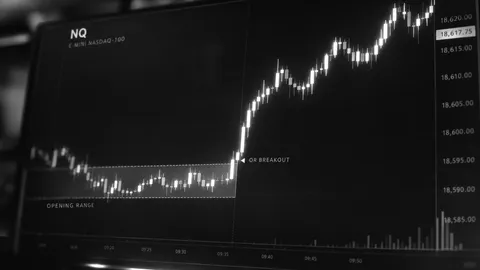
I taught business for more than 20 years and still came home to an employee's paycheck. If that sounds like where you are, the course is this routine taught step by step, starting with setups like the opening range breakout. You can see what's inside here.
Sources
- 01SEC, Day Trading: Your Dollars at Risksec.gov
- 02Nasdaq, stock market trading hours (regular session 9:30 a.m. to 4:00 p.m. Eastern)nasdaq.com
- 03CME Group, Micro E-mini Nasdaq-100 futures contract specs (trading hours)cmegroup.com
- 04Chague, De-Losso and Giovannetti, Day Trading for a Living? (SSRN, 2020)papers.ssrn.com
Margins and fees change. Check with your broker before you trade.
The routine I teach, step by step.
The Stock Glitch: the system I use, in short lessons you watch at your own pace.
- One payment
- Access now
- 30-day refund